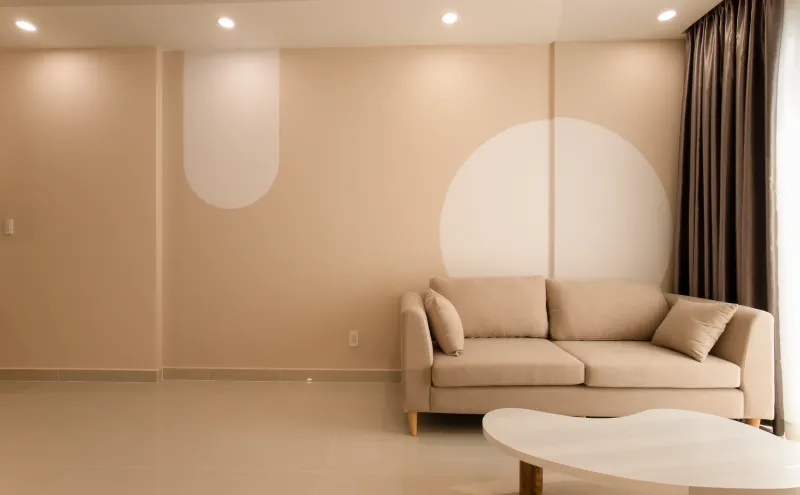
The Price of the Pause: Inside America's Million-Dollar Empty Rooms
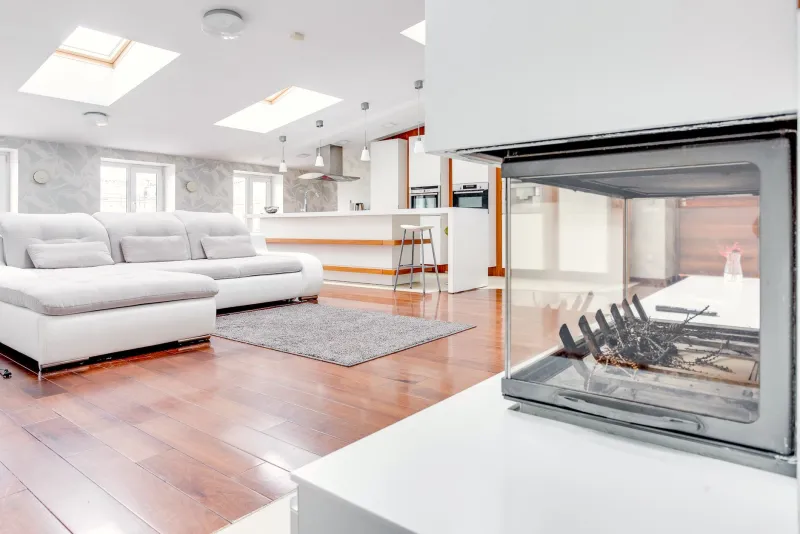
There is a particular irony that would not be lost on the mathematicians of ancient India: the zero, the symbol they gave the world, has become the most expensive number in American real estate.
Walk through the marketing materials for a new luxury tower in Tribeca or a hillside compound in Bel Air and you will find a vocabulary that would have seemed absurd a generation ago. Negative space. Deliberate absence. The luxury of nothing. Developers now speak of the empty wall the way they once spoke of marble imported from Carrara — as a material, a commodity, a thing of value. And buyers, it turns out, are willing to pay seven figures for it.
When Emptiness Became a Floor Plan
The philosophical lineage is unambiguous, even if the marketing rarely credits it. The Japanese concept of ma — the pregnant pause, the interval that gives meaning to what surrounds it — has circulated through American design culture since at least the 1970s. Its deeper ancestor, however, is Indian. Shoonya, the void at the center of Vedic and Buddhist thought, is not mere absence but generative emptiness: the space from which form becomes possible. It is no coincidence that the numeral zero traveled from India through the Arab world into Europe, transforming mathematics along the way.
What has changed in the last decade is the price attached. American architects of a certain stature — the ones whose waitlists run years long — have quietly built careers on what they decline to build. The double-height void above a living room. The corridor that ends in nothing but light. The window wall framed around a single bare tree. These are not omissions, their designers insist. They are the architecture.
One New York-based architect, whose firm commands fees that rival those of the developers who hire them, put it plainly in a recent conversation: "Clients used to ask what we could add for their budget. Now they ask what we can take away. The answer is almost always the most expensive thing in the project."
The Economics of Nothing
The arithmetic is genuinely strange. A void — a double-volume space connecting two floors — consumes square footage that could otherwise hold a bedroom, a media room, a home office. In a Manhattan tower where comparable space trades at upward of $4,000 per square foot, that emptiness carries a sticker price in the hundreds of thousands. In the Hamptons, where new builds routinely break eight figures, the number climbs higher still.
And yet the void sells the building. Brokers report that apartments organized around a dramatic empty volume — what one listing memorably called "a cathedral of quiet" — move faster and price higher per square foot than their more densely programmed neighbors. The emptiest room in the house is, functionally, the showroom.
There is a wry observation buried in this for anyone who has followed the arc of minimalist aesthetics: what began as renunciation has become accumulation. The shoonya of the Upanishads asks the practitioner to release attachment to form. The shoonya of the American luxury market asks for a wire transfer.
Can You Design a Void?
Which raises the question this magazine was, in a sense, founded to ask: can emptiness actually be designed? Or can it only be framed?
The architects we spoke to were surprisingly divided. One camp argues that emptiness is a construction like any other — that the void above a staircase is the product of structural engineering, acoustical modeling, and a hundred small decisions about where walls stop and sightlines begin. In this view, emptiness is a craft, teachable and billable.
The other camp is more circumspect. Emptiness, they argue, is not made but revealed — and the architect's real work is restraint: resisting the urge to fill, to decorate, to justify the fee with objects. "You cannot draw nothing," one designer told us. "You can only draw the edges of nothing and then have the discipline to stop."
Both positions, interestingly, circle the same insight. The void in a luxury penthouse and the void in a raga's silence and the void a poet leaves at the end of a line share a single property: they are completed by whoever encounters them. The architect builds the frame. The emptiness itself belongs to the person standing in it.
Whether that person paid four million dollars for the privilege is, perhaps, a question for another tradition entirely — the one that gave us the zero in the first place, and never charged for it.