Nothing to Hide: Five Diaspora Designers Who Put India's Zero to Work
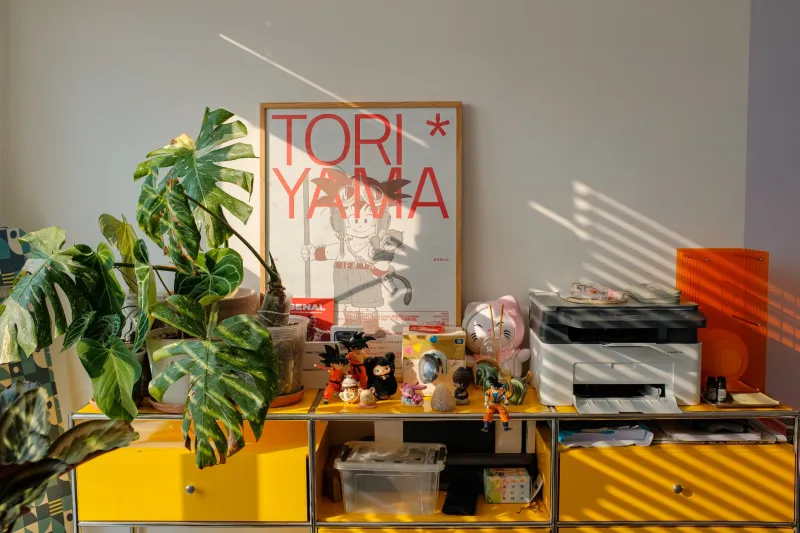
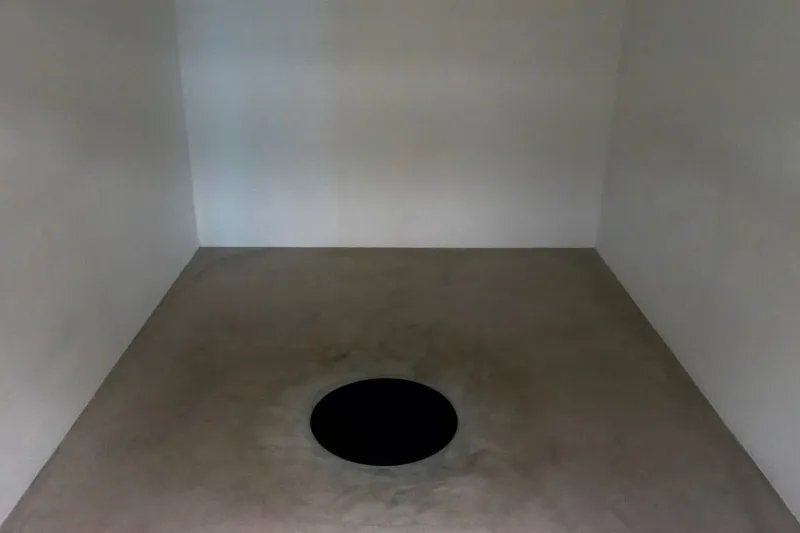
Minimalism, as practiced on American mood boards, has a sameness problem. White space, sans-serif type, a plant in the corner — a visual language so standardized it has become its own cliché. But strip away the trend and you find something older and stranger underneath: śūnya, the concept of zero that Indian mathematicians formalized around the fifth century CE. Zero was never 'nothing.' It was a placeholder that multiplied everything it touched.
The designers below — some born in Mumbai, some in Minneapolis — all treat negative space as a generative material. Their work argues, implicitly, that the most interesting thing in a composition is often the part that isn't there.
1. The Logo That Breathes: Priya Ramanathan, San Francisco
Ramanathan's studio, Zero Point Type, built its reputation on a single insight: a logo doesn't need to fill the space; it needs to organize it. Her identity work for a Bay Area wellness collective centers on a ring — the BINDU-adjacent circle of Indian manuscript tradition — that functions as both letterform and void. 'In Indian math, the zero is a position, not a quantity,' she has said. 'I design positions.' Her wordmarks routinely let the counter of an 'O' or 'D' carry more meaning than the stroke.
2. Poster as Portal: Anwar Hossain, Chicago
Hossain's screen-printed posters for Chicago's South Asian arts festivals look, at first glance, like exercises in restraint: a single glyph, acres of paper. Look longer and the emptiness starts doing work — the unprinted paper becomes sky, water, the silence between a tabla's beats. Hossain credits both Bangladeshi book cover traditions and Swiss grid design, but the tension between them is his own. His posters don't decorate a wall; they puncture it.
3. The Interior That Listens: Meera and Dev Kapadia, Brooklyn
The Kapadias' interior design practice, Threshold Studio, specializes in homes for second-generation South Asian families — clients who want heritage without the bazaar aesthetic. Their signature move is the threshold: an intentionally empty zone at the entry of a room, furnished with nothing, echoing the osari and courtyard logic of Gujarati and Deccani architecture. In a Brooklyn brownstone, that empty threshold reads as luxury. In its original context, it was something more precise: a space that required you to pause before entering.
4. Data Made of Silence: Rohan Iyer, Seattle
Iyer, a former Microsoft information designer, runs a small practice visualizing climate data for Pacific Northwest nonprofits. His charts are radical in their restraint — he removes gridlines, axes, and labels until only the essential shape remains, letting the viewer's eye complete the trend. He describes his method as 'shunya-driven design': the deletion is the argument. His viral 2023 poster series on glacier loss communicated more with less ink than any infographic of the decade.
5. The Typeface With a Hollow Heart: Naima Chowdhury, Toronto/New York
Chowdhury's display typeface 'Bindu Sans' — recently licensed by two major American museums — features counters (the enclosed emptiness inside letters) deliberately oversized. At large sizes, the negative space inside an 'a' or 'g' becomes the loudest element on the page. She cites Bengali alpona floor drawings and the mathematical zero in equal measure. 'Every letter is a container of nothing,' she notes. 'I just made the nothing louder.'
Minimalism With a Memory
What unites these five is a refusal to treat emptiness as a style. In the dominant American reading, white space signals sophistication — a luxury of omission. In the śūnya lineage, emptiness is functional, fertile, and ancient. It holds position. It amplifies what surrounds it.
For brands, galleries, and studios looking to move beyond the beige minimalism of the moment, the lesson is not 'use more white space.' It is this: know where your emptiness comes from. A blank that carries memory is never blank at all — it is a zero, and zeros, as every Indian mathematician knew, make everything around them larger.