Before the First Mark: How Emptiness Became Indian Art's Most Enduring Gift to the World

Photo by Photo by Zoshua Colah on Unsplash on Unsplash
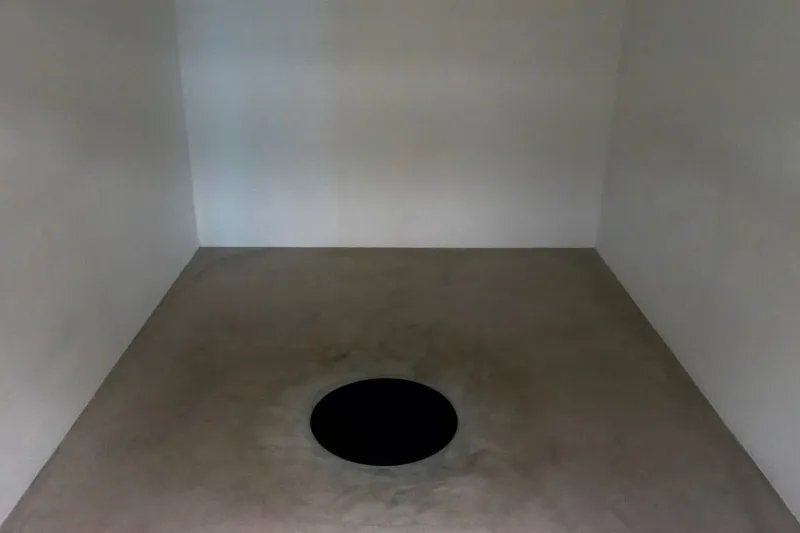
There is a peculiar anxiety that settles over an empty canvas. The American art student is taught to conquer it — to fill, to cover, to justify the surface. But an older tradition, one that runs through the subcontinent like a buried aquifer, suggests a different instinct entirely: that the blank is not a problem to be solved but a presence to be honored.
The Sanskrit word for it is śūnya — emptiness, the void, the cipher. It gave the world the numeral zero, arguably India's most consequential export. But śūnya was never mere arithmetic. In Buddhist philosophy, śūnyatā names the insight that all things are empty of fixed, independent existence — and that this emptiness is not loss but openness, the condition that makes transformation possible. Art, in this view, does not depict the void. It collaborates with it.
The Cave That Worshipped Nothing
Walk into the great chaitya halls of Ajanta or the early stupas at Sanchi and you encounter something disorienting for Western eyes: sacred architecture organized around an absence. The stupa is, at its heart, a solid mound — no idol, no narrative centerpiece, just form enclosing emptiness that the devotee circumambulates. The divine is signaled by what is withheld.
This discipline of withholding became a signature of Indian aesthetics. In classical Sanskrit poetics, the ninth rasa — śānta, the mood of tranquility — was said to arise precisely when the ornamentation falls away. The most powerful gesture in a performance, theorist Abhinavagupta argued, is often the pause after it.
Negative Space Gets Its Portrait Painted
By the time the Mughal ateliers were producing their jewel-like miniatures in the sixteenth and seventeenth centuries, this philosophy had become technique. Look closely at a masterpiece from the workshops of Akbar or Shah Jahan: the figures may be rendered with microscopic precision, but the ground around them — the luminous cream of the paper, the wash of unworked sky — is doing equal labor. The emptiness frames; it breathes; it creates the silence that lets a single cypress tree or lover's glance land with full weight.
Compare this to the European tradition of the same era, where canvas was real estate to be maximized, every corner claimed by drapery or cherub. The Mughal painter, like the Persian and Chinese masters before and alongside them, understood that a composition is a conversation between mark and unmarked field. The paper itself is a participant.
The Long Voyage West
When American modernism went looking for alternatives to European figuration, it found emptiness through several doors at once — Japanese Zen most famously, but the Indian line was quietly present too. The Beat Generation read the Prajñāpāramitā sutras; John Cage built an entire musical practice around structured silence, 4'33" being its most famous monument. Agnes Martin's luminous grids — painted in New Mexico, steeped in Taoist and Buddhist thought — are perhaps the closest American painting has come to the stupa: geometry in service of stillness.
Today, the circuit has widened. Walk the Frieze tents in Los Angeles or the galleries of Chelsea and you will find ma, śūnya, and the void marketed as the next frontier of connoisseurship. Collectors raised on maximalist abundance are discovering what the Ajanta carvers knew: that restraint is not the absence of ideas but their concentration.
Why the Zero Still Matters
There is an irony worth savoring. The West adopted the Indian zero as a mathematical tool and then, for centuries, treated emptiness in art as deficiency. Now, in an American culture saturated by feeds, notifications, and visual noise, the void has become the rarest commodity of all. Designers build apps around whitespace. Museums hang single objects in cavernous rooms. The market, ever belated, has learned to price silence.
At Shoonya Akar — literally "zero shape" — we take the name seriously. A shape defined by nothing is a shape defined by everything it could become. The zero is not the end of the number line; it is the beginning of place value, the hinge on which all magnitude turns. Likewise in art: the emptiness is not what remains when meaning is exhausted. It is what makes meaning possible.
The next time you stand before a work that seems to be mostly nothing — a field of unpainted canvas, a poem that ends early, a room that holds only light — consider that you may be looking at the oldest and most radical idea in the history of art. The blank is not waiting to be filled. It is already full.