Dead Air, Deliberately: Inside the American Podcast Studios Learning to Edit With Silence
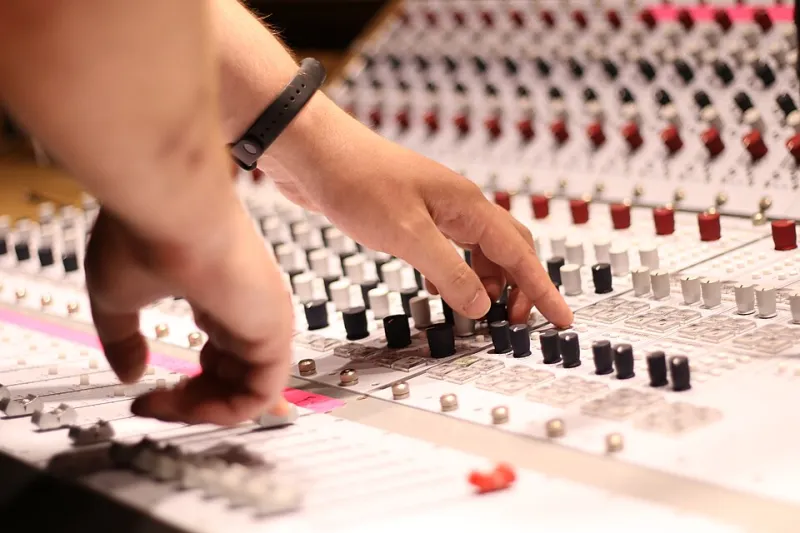
Photo: Max Rayden, CC BY-SA 4.0, via Wikimedia Commons
In a converted warehouse studio in Los Angeles Highland Park, a sound designer named Priya Raghavan sits before a waveform that terrifies most of her peers. It is flat. For four full seconds, the track she is mastering for a popular narrative podcast contains nothing at all no voice, no ambient tone, no music bed. Just silence, held like a breath.
Her client was skeptical. Then the listener retention data came back. The episode, built around a sequence of deliberately placed dead-air moments, outperformed the show's average completion rate by nearly twenty percent.
"We've been trained to treat silence as an error," Raghavan says. "But silence is a material. You can shape it the way a sculptor shapes clay. The question is not whether to use it it's whether you have the nerve."
The Discipline of the Pause
Across the American podcast industry, a craft that practitioners have begun calling strategic silence editing is quietly gaining adherents. At a moment when the medium is saturated more than five million active shows compete for attention in the same feeds a growing cohort of producers is betting that the way to stand out is to say less.
The philosophy behind the practice has older roots than any streaming platform. In Hindustani and Carnatic classical music, the pause is not the absence of performance; it is performance. A master vocalist holding silence before resolving a phrase creates a tension the listener feels physically. The audience at a mehfil does not shift in their seats during these gaps. They lean in. The anticipation is the composition.
This is the concept at the heart of Shoonya Akar the shape of emptiness, the form of the void. Indian art and philosophy have long understood that nothing is never merely nothing. The zero itself, after all, was India's gift to mathematics: a symbol whose entire function depends on absence being treated as a presence.
American audio engineers are now learning the same lesson through their faders.
What the Waveform Hides
Traditional American radio training, inherited by the first generation of podcast producers, treated dead air as a broadcast sin. Fill every second. Smooth every transition. The result, after two decades of optimization, is a soundscape of relentless density music stings stacked under narration, room tone padded over every edit, breaths scrubbed from sentences until voices sound less human than appliances.
The counter-movement began, fittingly, with failure. When the pandemic emptied professional studios in 2020, home-recorded shows couldn't hide their seams. Some producers, unable to afford the polish, leaned into the gaps instead and discovered audiences responded with unexpected intimacy.
Maya Chen, an audio post engineer in Brooklyn who works on documentary-style shows, describes the technique as a kind of negative-space composition borrowed from visual art. "In a painting, the empty area isn't leftover canvas it's what gives the subject its weight," she explains. "In audio, if I give you two seconds of true quiet after a revelation, your brain does something extraordinary. It replays what was just said. It catches up. The silence is where comprehension happens."
Chen distinguishes between different species of engineered silence: the held pause, which stretches tension; the room-tone gap, which preserves a sense of physical space without speech; and what she calls the drop-out a sudden subtraction of the entire sound bed that makes the listener feel like the floor gave way.
Data From the Void
The anecdotal craft is beginning to attract empirical attention. Analytics firms serving the podcast industry have started segmenting retention curves around moments of extended silence, and early findings complicate the conventional wisdom. While unexplained gaps in the first two minutes of an episode reliably drive abandonment, silences placed after narrative peaks those following a confession, a turn, a resolved question correlate with longer listen-through times, not shorter.
The distinction matters. Random silence reads as technical failure. Composed silence reads as intention. Listeners, it turns out, can tell the difference, even if they cannot articulate why.
"It's the same reason a comedian pauses before a punchline," says Devon Marsh, a producer for a charting true-crime program in Chicago. "Timing is everything, and timing requires time. When I cut a beat of dead air into the right moment, the phone screen goes dark in listeners' hands and their imagination takes over. I'm not losing them in that second. I'm handing them the story."
An Old Idea in a New Medium
Raghavan, who trained in both Western audio engineering and Carnatic music, sees the trend as a homecoming rather than an innovation. "My guru used to say the note begins before you sing it, in the silence you prepare," she recalls. "Every alaap is built on that foundation. American podcasting is a very young art form. It's only now old enough to learn that restraint is a skill."
There is a broader lesson here for American creative culture, one that Shoonya Akar returns to often: in a media environment engineered to fill every waking moment with stimulus, emptiness has become scarce and scarcity, as any economist will confirm, creates value. The podcasts winning the longest listens are not the loudest. They are the ones confident enough to leave room in the frame.
The void, it turns out, was never empty. It was waiting to be edited.