The Feed Holds Its Breath: Inside America's Deliberately Empty Posts
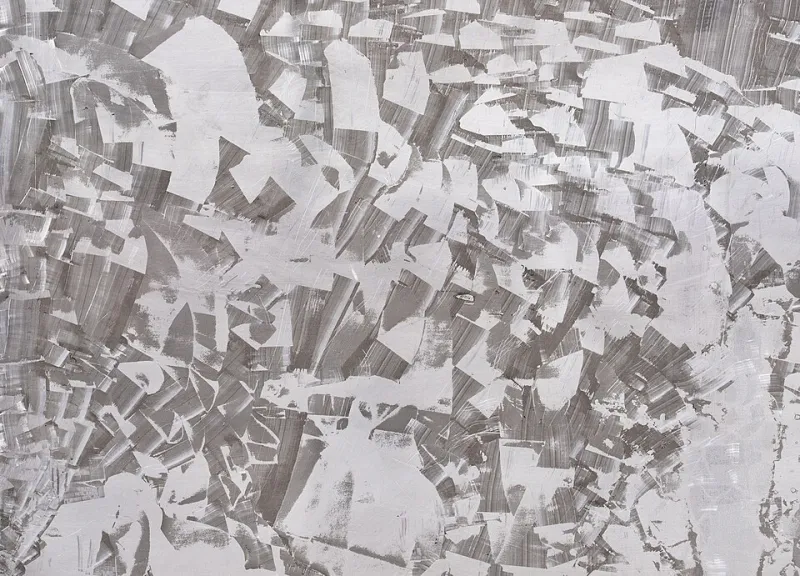
Photo: Roman Eisele, CC BY-SA 4.0, via Wikimedia Commons
Somewhere in your feed right now is a post that contains nothing. A gray square. A carousel of blank slides. A TikTok of a creator sitting in silence for forty-five seconds, saying only, at the end, "that's it." And somewhere in your notifications is the evidence that these posts are working — thousands of saves, shares, comments asking the only reasonable question: why?
The American internet has spent fifteen years optimizing for density. More hooks, more captions, more color-graded footage at golden hour. Into that saturation, a countercurrent has formed — one that treats absence not as a failure to post, but as the post itself.
The Aesthetics of Withholding
Scroll through the Instagram of any number of New York–based designers, Bay Area writers, or Chicago-based visual artists under thirty-five and you may find it: a grid punctuated by solid-color tiles, empty frames, screenshots of nothing. On Substack, a growing genre of newsletter arrives as a single sentence followed by white space — sometimes a single sentence that is just a period.
This is not laziness, and it is not a glitch. It is a design decision, and increasingly a deliberate one. "I posted a completely black slide last spring," one Brooklyn-based art director told us. "It became my most-saved post of the year. People projected onto it whatever they needed. I couldn't have designed that if I'd filled it."
What reads as novelty is, in fact, an old idea wearing new clothes.
Shoonya, Scrolling
In Sanskrit, shoonya — the word from which our own name descends, and the root of the English "zero" — names the void that is not absence but potential. Indian mathematics gave the world the zero not as nothing, but as the placeholder that makes every other number possible. Indian classical performance has long understood the power of the held pause; the visual traditions of the subcontinent, from Mughal manuscript margins to the unpainted grounds of miniature painting, have always treated empty space as an active participant in the composition.
American creators did not invent the empty post. They are, perhaps unknowingly, borrowing from a grammar the subcontinent has been fluent in for centuries.
The diaspora has noticed. "My grandmother would tell me that the silence in a room isn't emptiness — it's where the room lets you breathe," says a second-generation Indian-American illustrator in Austin, whose most shared work is a series of prints that are almost entirely negative space, a single line of ink drifting across cream paper. "When I translate that to a feed, the blank post isn't me being lazy. It's me giving the audience the same courtesy."
Why Nothing Performs
The mechanics are almost comically simple. In a feed engineered to overwhelm, the empty post is a pattern interrupt. The brain, trained to process dense visual information, hits a void and stalls — and a stalled thumb is the rarest commodity in American social media. Dwell time, the metric platforms prize above nearly all others, spikes when there is nothing to look at but everything to wonder about.
But the economics only explain the virality, not the impulse. The deeper current is exhaustion. Creators who once posted daily are burning out under the demands of the algorithm, and the empty post has become both protest and palliative — a way to remain present without producing. Some call it anti-content. Others call it a sabbath.
"There's a reason every spiritual tradition in South Asia has a practice of stillness," says a Mumbai-born, Seattle-based writer whose newsletter now opens each month with a full-screen blank image. "Fasting exists in food the way the blank post exists in content. You remove the thing to remember why you wanted it."
The Diaspora's Quiet Advantage
For South Asian American creators, the empty post carries a double register. It is a growth tactic, yes — but it is also a homecoming. The traditions of maun (intentional silence), the unpainted pratima awaiting consecration, the breath between ragas: these are inherited references, not imported ones.
A Los Angeles-based filmmaker of Bengali descent described her viral silent short — a minute of a window frame, rain, no score — as "the most Indian thing I've ever made." She had never set foot in Kolkata. "But the sensibility," she said, "came from somewhere older than me."
This is the quiet irony of the moment: American platform culture, in its relentless pursuit of the new, has arrived at one of the oldest ideas on earth. The void, it turns out, was always publishable. It was simply waiting for an audience loud enough to need it.
Making Room
None of this argues that every creator should go dark. The empty post works precisely because it is rare — a rest note in a composition, meaningless if the whole score goes silent. The lesson is not absence but intention: the recognition that space, in design as in life, is not what is left over after the work is done, but part of the work itself.
Shoonya Akar has long held that emptiness takes shape the moment you attend to it. The American feed, exhausted and overfull, is learning the same lesson — one blank square at a time.
The next post that stops your scroll may contain nothing at all. Look closer. That is exactly the point.