When the Frame Holds Its Breath: Indian Negative Space Meets American Motion Design
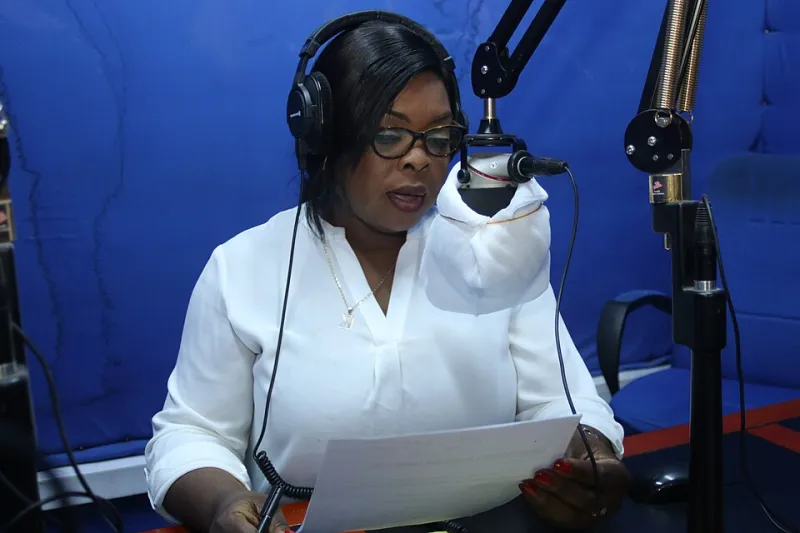
Photo: Monusco on Flickr, CC BY-SA 2.0, via Wikimedia Commons
In a Burberry screening room in Los Angeles, an animator pauses a reel mid-shot. Nothing moves. A character stands at the edge of the frame; the rest of the composition is deliberately, almost provocatively, vacant. For the animators at the table, this held breath — the twenty-four frames of nothing — is the shot.
It is also, increasingly, a lesson borrowed from traditions thousands of years old.
The Studio That Stopped
American animation has long treated stillness as absence of work. Squash and stretch, anticipation, follow-through — the canonical principles handed down from Disney's golden era are, at heart, a doctrine of perpetual motion. Every frame is meant to earn its keep. Idle space reads as dead air.
But a quiet correction is underway. In studios from Portland to Brooklyn, motion designers — many of them part of the South Asian diaspora — are arguing that the most expressive thing a frame can do is hold still, and that the composition around that stillness matters as much as the movement itself.
The reference points are not European modernism this time. They are Warli painting's breathing gaps, patachitra scroll borders that refuse to close, and the miniature traditions of the subcontinent where the unpainted ground is not background but participant.
What Warli Knows About Timing
Warli art, the ritual painting tradition of Maharashtra's tribal communities, is built from white geometric figures on earthen brown. What strikes animators first is the spacing: figures do not crowd. The gaps between dancers in a tarpa dance circle are not accidents of composition — they are the rhythm made visible. The painting breathes because the space between forms is allowed to exist.
"When I first started storyboarding, I packed every frame," says a Bangalore-born motion designer now working at a Seattle games studio. "My creative director, who's American, kept asking why everything felt anxious. It took me years to articulate what I'd grown up seeing in my grandmother's floor paintings — the emptiness isn't what's left over. It's part of the sentence."
In practice, this translates to pacing decisions: a hold that lasts two beats longer than comfort suggests, a background that recedes into flat color while the eye rests, a transition that passes through pure blankness rather than a wipe or a blur.
Patachitra's Open Borders
The patachitra scroll traditions of Odisha and Bengal offer a different instruction. Their borders — dense with decorative motifs — often frame narratives that seem to spill past the edge, deliberately unresolved. The border contains; it does not conclude.
American motion design, shaped by the tidy grammar of UI animation and the loop-hungry demands of social platforms, tends to resolve everything. Animations end. Transitions close. The patachitra model proposes something else: work that gestures beyond its own frame, endings that remain open because the scroll continues — conceptually — off-screen.
Several independent studios on the West Coast have begun experimenting with what they call "unfinished loops" — animations designed to feel continuous rather than concluded, borrowing the scroll's logic of sequential narrative without terminal points.
Shoonya, Animated
The philosophical anchor here is the site's namesake: shoonya, the void, the zero that Indian mathematics gave the world. In artistic terms, it is the insistence that emptiness is generative — that the unpainted, the unspoken, the unmoving carries as much meaning as its opposite.
For diaspora animators, translating shoonya into motion is a professional and personal project. "In Indian classical dance, the stillness between mudras is choreographed," one Los Angeles-based character animator explains. "The pause has a count. When I animate, I time my holds the way a dancer holds an abhinaya expression — deliberately, with intent, not because the machine ran out of instructions."
This approach is finding receptive ground in American studios confronting animation fatigue. Audiences raised on maximalist motion — every pixel shimmering, every background parallaxing — are showing signs of exhaustion. The success of quietly paced work, from indie shorts to title sequences built on long, unbroken holds, suggests an appetite for animation that trusts the viewer to sit still.
Teaching the Timeline to Wait
The practical challenge is institutional. Production schedules price stillness at zero. A held frame is, on a spreadsheet, a frame nobody worked on. Convincing producers that emptiness is labor — that composing a meaningful void takes as much craft as composing a chase — remains an uphill argument.
Yet the vocabulary is spreading. Design education programs are adding South Asian art history to motion curricula that once began and ended with the twelve principles. Online animation communities debate the ethics of the hold. And in portfolio reviews across the country, a recurring note appears: "Give it room."
It is a small phrase with old roots. The space between Warli figures, the open edge of a patachitra scroll, the count of silence in a thumri — these are all the same instruction, delivered across centuries: the frame does not need to be full to be complete.
American animation, it turns out, is finally learning to wait.