The Curtain That Breathe: Why Bollywood's Interval Might Save American Streaming From Itself
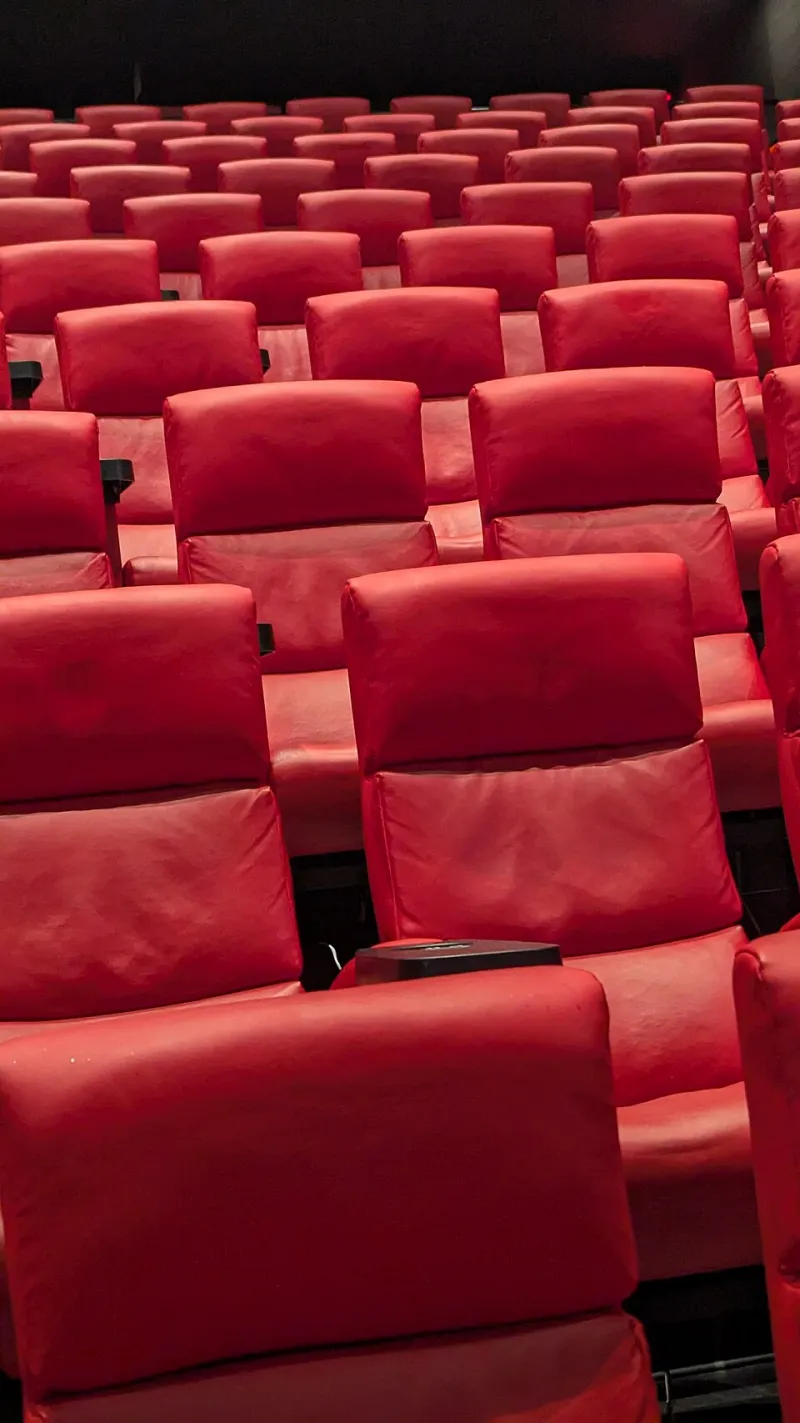
Photo: Eden, Janine and Jim from New York City, CC BY 2.0, via Wikimedia Commons
There is a moment, familiar to anyone who grew up in a single-screen theater in Delhi or Mumbai, that American audiences have mostly never experienced: the lights come up. Not at the end of the film. Halfway through. The screen goes dark, chai is poured, samosas are passed down the row, and for ten or fifteen minutes the story simply stops — not because the projector broke, but because the storytellers decided it should.
This is the interval, and it is not an interruption. It is a room.
Friction as a Design Decision
American streaming has spent the last decade at war with the pause. Autoplay counts down from five seconds. 'Skip Intro' buttons appear before the theme song finishes its first phrase. Netflix famously tested — and audiences famously punished — any feature that asked viewers to make a choice between episodes. The entire architecture of the platform is built on a single assumption: that the moment a viewer stops, the story loses its grip, and the story must never lose its grip.
But the Indian interval was never about losing grip. It was about deepening it.
Consider the classical structure it grew from. Hindi commercial cinema, borrowing from the two-act rhythms of Parsi theater and the epics of the Ramayana and Mahabharata, learned to place its turn — the twist, the rupture, the moment the protagonist's world inverts — precisely at the interval point. The first half builds a world; the break detonates it; the second half asks what survives. The pause is not a gap in the design. It is the hinge. Remove it and the door stops swinging.
What the Break Actually Does
Sit with the shape of it for a moment, because the shape is the point. The interval creates what we might call a held breath — a deliberate emptiness into which the audience pours their own anticipation. In the theater, that emptiness is social: strangers arguing about what just happened, families debating what will. At home, in the streaming context, it would be private: a silence in which the viewer's own imagination does the work the algorithm usually does for them.
This is, at its heart, a design argument. Shoonya — the void, the zero, the productive emptiness — has long been understood in South Asian aesthetic traditions not as absence but as capacity. A screen that stops is a screen that invites. A story that halts is a story that trusts its audience to carry it for a while.
American streaming trusts no one. Every second of dead air is a churn risk, a subscriber one tap away from a competitor. The platforms have optimized so thoroughly against the pause that they have optimized against reflection itself.
The Experiments Already Underway
And yet the pause is sneaking back. Netflix has tested watch-party features that build communal breaks into group viewing. Max and Hulu have experimented with interstitial screens — brief, designed moments between episodes that function less as ads and more as decompression chambers. The rise of the 'one-episode-a-week' release schedule, against the binge model, was itself a concession: a recognition that spacing stories out made audiences feel them more.
Meanwhile, diaspora filmmakers are making the case from inside the industry. Directors with one foot in Bollywood's grammar and one in Hollywood's pipeline have quietly lobbied for structural breaks in prestige streaming — not ad breaks, but authored ones. Imagine a series that ends its third episode not on a cliffhanger sting but on an honest, full stop. A built-in interval card, designed like a title sequence, that says: this story is breathing. You may breathe with it.
The resistance is real. Product teams call it 'leakage.' Executives cite completion metrics. But the audience data tells a different story: viewers who pause, who sleep on an episode, who discuss it over dinner, retain longer and recommend louder. The break is not churn. The break is memory.
A Zero With a Shape
There is a reason the number zero traveled from Indian mathematics into the global imagination and never left. Zero is not nothing; it is the placeholder that makes every other number mean something. The interval works the same way. It is the nothing in the middle of the story that gives both halves their value.
American streaming built its empire on the assumption that attention is a resource to be captured and held without pause. The Indian theatrical tradition built its grammar on a different assumption: that attention is a fire, and a fire needs air. Cut off the oxygen entirely and you do not get a stronger flame. You get smoke.
The platforms experimenting with pause screens and watch-party breaks may not know they are reinventing the interval. Audiences may not be able to name what they are missing. But sit in a theater in Mumbai when the lights come up at the halfway mark and watch what a room full of strangers does with ten minutes of designed emptiness — the arguing, the laughing, the leaning forward — and you will understand what the autoplay countdown never could.
The most powerful moment in the movie is the one where the movie stops.
Shoonya Akar means the shape of emptiness. Bollywood drew that shape into the middle of its stories a century ago. American streaming is only now, tentatively, learning to trace it.