Admission to Absence: Inside the American Galleries Selling the Void by the Ticket
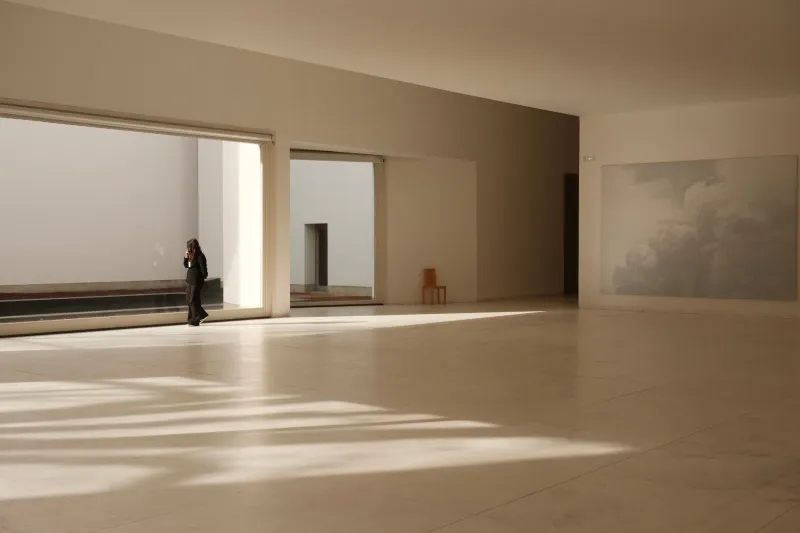
There is a particular hush that falls over a visitor standing in front of a wall that contains nothing. Not a painting, not a label, not so much as a shadow of intention — just plaster, paint, and the low hum of climate control. At a growing number of American galleries and museums, that hush has become the main attraction, and it comes with a price of admission.
The Empty Room as Exhibition
Over the past several seasons, institutions from Los Angeles to Marfa to the Rust Belt have programmed what might loosely be called negative space shows: exhibitions built around blank canvases, vacated galleries, and installations whose only content is the absence of content. Some are institutional retrospectives of artists like Yves Klein or the conceptualists of the 1960s and '70s. Others are newly commissioned void rooms — sealed chambers, whitewashed floors, a single bench — marketed with the confidence of any other blockbuster.
What distinguishes the current moment is not the emptiness itself but the economics around it. Admission at these shows frequently matches, and occasionally exceeds, the ticket prices of traditional exhibitions. Timed-entry slots sell out. Gift shops stock postcards of bare walls. The void, it turns out, is a draw.
A Lineage Older Than the Price Tag
The gesture is hardly new. Kasimir Malevich exhibited a white square more than a century ago. Klein famously staged an exhibition of empty gallery space in Paris in 1958 and called it a success. Robert Rauschenberg's white paintings, John Cage's silent compositions, and the minimalists of the 1960s all trained Western audiences to read absence as statement rather than failure.
What the American art world has done, characteristically, is industrialize the experience. Where European conceptualism treated emptiness as provocation, the American museum treats it as product — packaged, scheduled, and priced. Critics have been quick to note the irony: the anti-commodity transformed into a commodity, the gesture of refusal turned into revenue.
Who Pays to See Nothing?
The audience, perhaps unsurprisingly, skews toward the same demographic that made immersive installations and meditation apps profitable: urban professionals, design-literate millennials, and tourists seeking the next photograph-adjacent experience. Many visitors describe the empty rooms as a form of relief — a rare environment that demands nothing of them. In a culture saturated with content, the gallery of nothing offers a scarcity more valuable than spectacle: attention without obligation.
Museum administrators, for their part, point out that emptiness is expensive. Climate control, security, insurance, and the lost opportunity cost of a gallery that could have hung a crowd-pleasing collection all factor into the arithmetic. Charging for nothing, they argue, is simply honest accounting.
Shoonya and the Long View
For readers of this publication, none of this will feel foreign. The Indian subcontinent understood the generative power of the void long before Western modernism arrived at it — shoonya, the zero, the emptiness that is not absence but potential. The blank canvas of the American gallery and the bindu of classical Indian aesthetics are cousins, separated by centuries and by very different ideas of what nothing is for.
The difference is instructive. Where the Indian tradition treats emptiness as a doorway — a state to pass through toward fuller understanding — the American market risks treating it as a destination, a consumable terminus. A ticket buys you a room; what you do with the emptiness remains, mercifully, free.
Whether this trend matures into something lasting or collapses under the weight of its own irony, one thing is clear: the void has entered the cultural marketplace, and it has learned to price itself. The question for visitors is no longer whether emptiness belongs in a gallery. It is whether, at twenty-five dollars a head, we can still afford to be empty together.