Sixty Seconds of Nothing: The American Stage Learns to Hold Its Breath
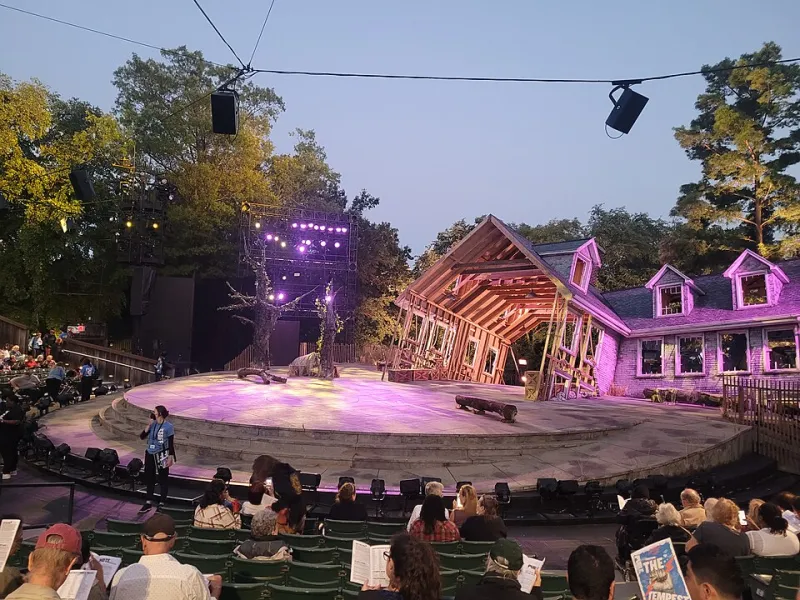
Photo: SnowFire, CC BY 4.0, via Wikimedia Commons
There is a moment in the second act of Ashes, Held — a new play running Off-Broadway this season — when the lead actress crosses to a window, sets down a cup of tea her character will never drink, and stands motionless for nearly a full minute. No line follows. The audience, weaned on the rapid-fire cadence of streaming television, is left alone with the sound of the theater's own ventilation.
It is the most discussed sixty seconds in New York theater right now, and it contains not one written word.
The Scripted Void
Playwrights have always used pauses — Pinter built a career out of them — but what is happening in American theater this season is different in scale and intention. Directors are now notating silence the way composers notate rests: precisely, durationally, and with the expectation that the emptiness itself will carry the emotional payload of the scene.
The shift owes a quiet debt to South Asian performance traditions, where stillness is not the absence of expression but its most concentrated form. In Bharatanatyam, the held pose — the sthai — is a discipline of the body becoming architecture. The dancer does not pause between meanings; the pause is a meaning. American directors who have trained with practitioners of these forms describe the revelation in similar terms: silence on stage, done with intention, is not dead air. It is load-bearing.
Three Rooms, Three Silences
In Chicago, a storefront production of a new ensemble piece closes its first act with ninety seconds of collective stillness — six performers seated, facing the audience, breathing audibly. The director calls it "letting the room finish the sentence." Some nights, she admits, the audience fidgets. Other nights, she says, you can hear an entire theater forget to shift in its seats.
A second production, in Brooklyn, stages a family dinner where the climactic revelation is delivered, and then nothing happens for forty-five seconds. The playwright wrote the duration into the script — "one minute, no less" — after studying how classical Indian performance treats the suspended moment as a space the audience must cross on foot.
The third, a small production in the East Village, goes furthest: an eleven-minute stretch in the final act where dialogue simply stops, and two characters share a stage the way one shares a room with a sleeping person. The silence is not tension. It is companionship, rendered in negative space.
Can an Audience Trained on the Scroll Sit Still?
The question hovering over all three productions is whether American audiences — conditioned by autoplay, by the skip button, by content that arrives before the wanting does — can metabolize this kind of duration. The early evidence suggests they can, though not without friction. Walkouts have been reported. So have standing ovations, which is its own irony: the loudest American response to the quietest American theater.
What the detractors call indulgence, the practitioners call respect. To give an audience silence, they argue, is to trust them with authorship — to let them fill the void with whatever they brought into the building. It is the theatrical cousin of the empty canvas, the unwritten line, the uncluttered room: the conviction that meaning deepens when the maker withholds.
Shoonya Takes the Stage
At Shoonya Akar, we think often about the zero — shoonya — as a shape rather than a lack. American theater is only now learning what the subcontinent's oldest performance lineages have always known: that the emptiest moment on a stage, held long enough and with enough care, becomes the fullest.
The cup of tea sits by the window. The actress does not move. Sixty seconds pass, and something in the darkened house — attention itself — finally arrives.